

The cutting speed of a steel formwork milling machine is a crucial parameter that directly impacts the efficiency, quality, and cost - effectiveness of the machining process. As a supplier of Steel Formwork Milling Machines, I have in - depth knowledge of this topic and am eager to share some insights.
Understanding Cutting Speed
Cutting speed, often denoted as (V), is defined as the relative speed between the cutting tool and the workpiece surface being machined. In the context of a steel formwork milling machine, it refers to how fast the cutting edge of the milling cutter moves across the steel formwork. The unit of cutting speed is typically meters per minute (m/min) or feet per minute (ft/min).
The cutting speed is affected by multiple factors. One of the most significant factors is the material of the cutting tool. High - speed steel (HSS) cutters are commonly used in many steel formwork milling operations. They can handle a relatively wide range of cutting speeds, usually between 20 - 60 m/min for mild steel formwork. However, carbide - tipped cutters, which are more wear - resistant and heat - resistant, can operate at much higher cutting speeds, often ranging from 100 - 300 m/min for the same mild steel material.
The hardness of the steel formwork also plays a vital role. Harder steels, such as high - carbon or alloy steels, require lower cutting speeds to avoid excessive tool wear and breakage. For example, when machining a high - carbon steel formwork with a hardness of around 40 - 50 HRC (Rockwell hardness scale), the cutting speed might need to be reduced to 10 - 30 m/min even with carbide - tipped cutters.
Importance of Optimal Cutting Speed
Maintaining an optimal cutting speed is essential for several reasons. First, it directly affects the tool life. If the cutting speed is too high, the cutting tool will experience excessive heat generation due to the friction between the tool and the workpiece. This heat can cause the tool material to soften, leading to rapid wear and eventually tool failure. On the other hand, if the cutting speed is too low, the machining process becomes inefficient as it takes longer to remove the material, increasing the overall production time and cost.
Second, the cutting speed influences the surface quality of the machined steel formwork. An appropriate cutting speed helps to produce a smooth surface finish, reducing the need for additional finishing operations. When the cutting speed is within the optimal range, the chips are removed in a more controlled manner, preventing issues such as built - up edge formation, which can cause surface roughness and inaccuracies in the machined parts.
Calculating Cutting Speed
The cutting speed can be calculated using the following formula:
[V=\pi Dn/1000]
where (V) is the cutting speed in m/min, (D) is the diameter of the milling cutter in millimeters, and (n) is the rotational speed of the cutter in revolutions per minute (RPM).
For example, if we have a milling cutter with a diameter (D = 50) mm and a rotational speed (n=1000) RPM, the cutting speed (V=\pi\times50\times1000/1000\approx157) m/min.
However, in practical applications, the calculation is not always this straightforward. We need to consider the specific requirements of the steel formwork, the type of milling operation (such as face milling, end milling, or slot milling), and the capabilities of the milling machine itself.
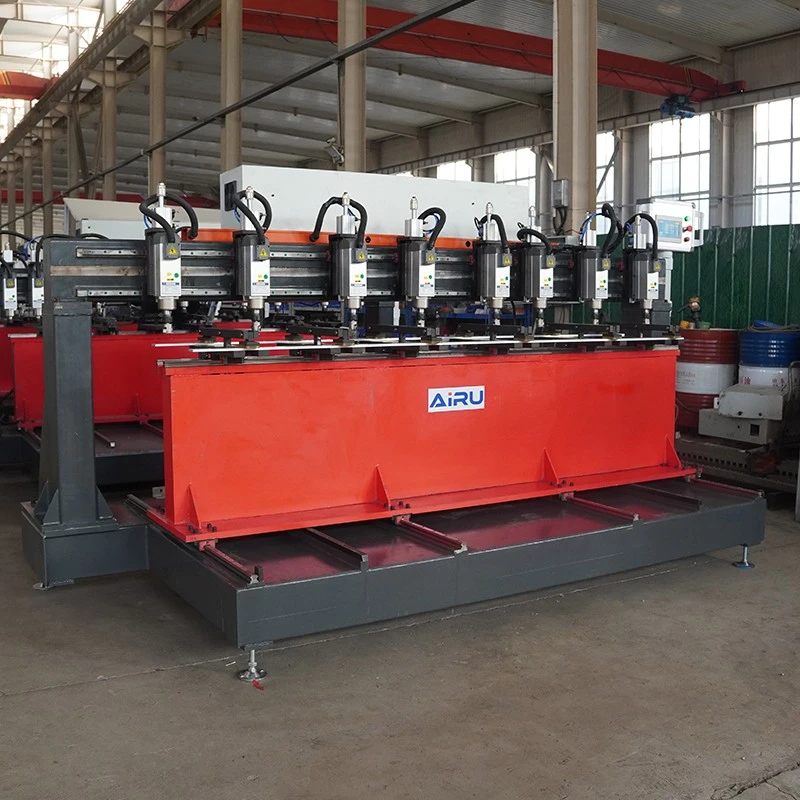

Impact of Milling Machine Design on Cutting Speed
The design and capabilities of the steel formwork milling machine also have a significant impact on the achievable cutting speed. A well - designed machine with a rigid structure can better withstand the forces generated during high - speed machining. Machines with high - power spindles can provide the necessary torque to drive the cutting tool at higher rotational speeds, enabling higher cutting speeds.
Moreover, advanced control systems in modern milling machines allow for precise adjustment of the cutting speed according to the specific requirements of the job. For instance, some machines can automatically adjust the cutting speed based on the feedback from sensors that monitor the cutting force, tool wear, and surface quality.
Industry - Specific Applications
In the construction industry, steel formwork milling machines are used to create precise shapes and features on formworks that are used for concrete casting. Here, the cutting speed needs to be carefully controlled to ensure the accuracy of the formwork dimensions. For large - scale projects, a higher cutting speed might be preferred to increase the production rate, but not at the expense of quality.
In the manufacturing of machinery parts using steel formworks, the requirements for surface finish and dimensional accuracy are often even more stringent. In such cases, the cutting speed is usually adjusted to a level that balances between production efficiency and the high - quality standards.
Related Machines and Their Applications
If you are interested in other types of formwork milling machines, we also offer Aluminium Formwork Slot Milling Machine and Eight - axis Aluminum Formwork Milling Machine. The aluminium formwork slot milling machine is specifically designed for creating slots in aluminium formworks, and its cutting speed requirements are different from those of steel formwork milling machines due to the softer nature of aluminium. The eight - axis aluminum formwork milling machine offers more flexibility and precision in machining complex shapes on aluminium formworks.
If you are looking for a reliable Steel Formwork Milling Machine, we have a wide range of models to meet your specific needs. Our machines are designed with the latest technology to ensure high - speed, accurate, and efficient machining of steel formworks.
Conclusion and Call to Action
In conclusion, the cutting speed of a steel formwork milling machine is a complex parameter that depends on multiple factors such as the cutting tool material, the hardness of the steel formwork, and the design of the milling machine. By understanding these factors and maintaining an optimal cutting speed, you can achieve higher production efficiency, better surface quality, and longer tool life.
If you are in the market for a steel formwork milling machine or have any questions regarding cutting speed and its impact on your machining operations, we encourage you to reach out to us. Our team of experts is ready to assist you in choosing the right machine and optimizing your machining process.
References
- "Machining Fundamentals" by John T. Black
- "Modern Manufacturing Processes" by Rajender Singh
- Industry reports on formwork machining technology