

In the modern era of advanced manufacturing, the demand for high - precision electronic components is constantly on the rise. As a supplier of CNC drilling and milling machines, I often encounter inquiries about the machine's applicability in making electronic components. This blog aims to delve into the capabilities of CNC drilling and milling machines in the context of electronic component manufacturing.
The Fundamentals of CNC Drilling and Milling Machines
CNC (Computer Numerical Control) drilling and milling machines are automated manufacturing tools that use pre - programmed computer software to control the movement and operation of the cutting tools. These machines offer high precision, repeatability, and flexibility, which are essential in various manufacturing processes.
The basic functions of a CNC drilling and milling machine include drilling holes of different diameters and depths, milling flat surfaces, slots, and contours, and performing tapping operations to create threaded holes. The machine's spindle can rotate at high speeds, and the cutting tools can be precisely positioned in multiple axes (usually three to five axes), allowing for complex machining operations.
Requirements for Electronic Component Manufacturing
Electronic components, such as printed circuit boards (PCBs), semiconductor packages, and connectors, require extremely high precision in manufacturing. The dimensions of these components are often in the millimeter or even micrometer range, and the tolerances can be as small as a few micrometers. For example, in a PCB, the holes for component mounting need to be drilled with high accuracy to ensure proper alignment and electrical connection.
Surface finish is also crucial in electronic component manufacturing. A smooth surface can reduce electrical resistance, prevent signal interference, and improve the overall performance and reliability of the components. Additionally, the manufacturing process should be able to handle a variety of materials, including metals, plastics, and ceramics, which are commonly used in electronic components.
Capabilities of CNC Drilling and Milling Machines in Electronic Component Manufacturing
Precision Machining
CNC drilling and milling machines are capable of achieving high precision levels that meet the requirements of electronic component manufacturing. With advanced control systems and high - resolution servo motors, these machines can position the cutting tools with an accuracy of a few micrometers. For instance, when drilling holes in a PCB, the machine can ensure that the hole diameter and position are within the specified tolerances, which is essential for the proper functioning of the electronic device.
Complex Geometries
Many electronic components have complex geometries, such as irregular shapes, slots, and micro - features. CNC drilling and milling machines can easily handle these complex machining tasks. By using multi - axis machining capabilities, the machine can move the cutting tool in multiple directions simultaneously, allowing for the creation of intricate shapes and features. For example, in the manufacturing of semiconductor packages, the machine can mill out precise cavities and channels for housing the semiconductor chips and connecting wires.
Material Versatility
CNC drilling and milling machines can work with a wide range of materials used in electronic component manufacturing. They can cut through metals like copper, aluminum, and stainless steel, which are commonly used for connectors and heat sinks. Plastics, such as polycarbonate and epoxy, can also be machined to create insulating parts and enclosures. Ceramics, known for their high - temperature resistance and electrical insulation properties, can be drilled and milled with appropriate cutting tools and machining parameters.
Examples of Electronic Components Made Using CNC Drilling and Milling Machines
Printed Circuit Boards (PCBs)
PCBs are the backbone of modern electronic devices. CNC drilling and milling machines play a vital role in PCB manufacturing. They are used to drill holes for component mounting, mill the outer contours of the PCB, and create slots for connectors. The high precision of these machines ensures that the holes are accurately positioned, which is crucial for the proper soldering and electrical connection of components.
Semiconductor Packages
Semiconductor packages are used to protect and connect semiconductor chips to the external circuit. CNC drilling and milling machines can be used to machine the package body, create cavities for the chip, and drill holes for wire bonding. The ability to achieve high precision and complex geometries makes these machines suitable for manufacturing high - performance semiconductor packages.
Connectors
Connectors are used to establish electrical connections between different parts of an electronic device. CNC drilling and milling machines can be used to machine the connector bodies, drill holes for pins, and mill slots for proper alignment. The high - quality surface finish achieved by these machines can improve the contact performance and reliability of the connectors.
Advantages of Using CNC Drilling and Milling Machines in Electronic Component Manufacturing
High Efficiency
CNC drilling and milling machines can perform machining operations at a high speed, which significantly reduces the manufacturing time. Once the machining program is set up, the machine can run continuously, producing a large number of components with consistent quality. This high efficiency is especially important in mass production of electronic components.
Cost - Effectiveness
Although the initial investment in a CNC drilling and milling machine is relatively high, it can be cost - effective in the long run. The high precision and repeatability of these machines reduce the scrap rate, which saves on material costs. Additionally, the automation of the machining process reduces labor costs and human errors.
Customization
CNC drilling and milling machines offer great flexibility in manufacturing. They can easily adapt to different component designs and specifications by simply changing the machining program. This allows for the production of customized electronic components, which is important in the rapidly evolving electronics market.
Limitations and Challenges
Despite their many advantages, there are also some limitations and challenges when using CNC drilling and milling machines for electronic component manufacturing.
One of the main challenges is the generation of heat and chips during the machining process. Excessive heat can cause thermal damage to the electronic components, especially those made of heat - sensitive materials. The chips generated during machining can also contaminate the components and affect their performance. To address these issues, appropriate cooling and chip removal systems need to be implemented.
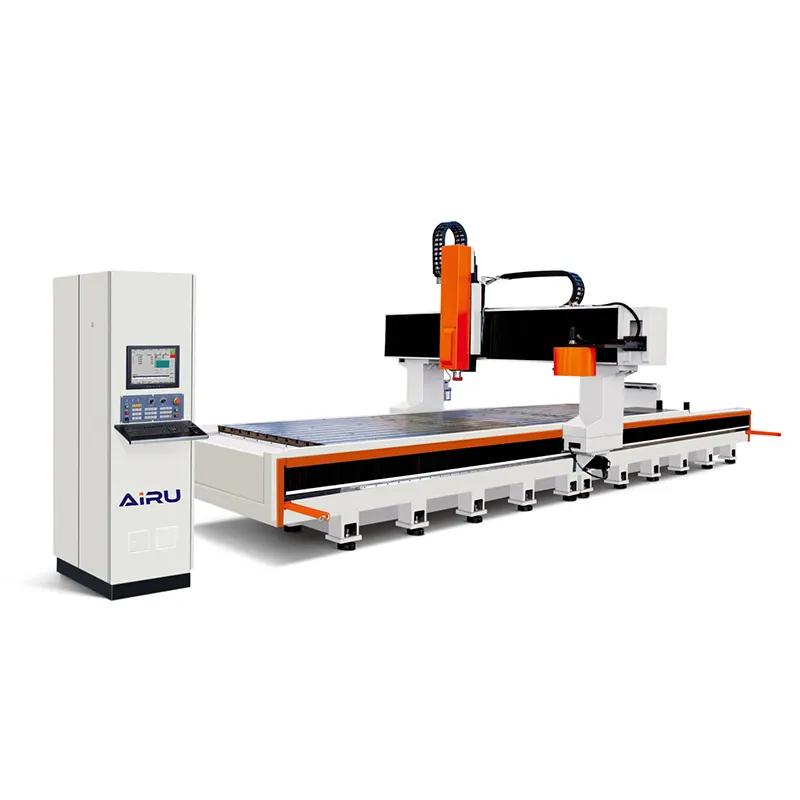

Another limitation is the limited size of the components that can be machined. Some CNC drilling and milling machines have a relatively small working area, which may not be suitable for manufacturing large - scale electronic components.
Related Equipment and Their Role
In addition to CNC drilling and milling machines, there are other related equipment that can be used in conjunction to enhance the electronic component manufacturing process. For example, Aluminum Profile Punching Equipment can be used for punching holes and shaping aluminum profiles, which are commonly used in electronic enclosures. Aluminum Profile Punching Machine offers high - speed punching capabilities, which can improve the production efficiency of aluminum parts. Aluminum Curtain Wall Processing Equipment can be used for processing aluminum curtain walls, which are used in some high - end electronic devices for aesthetic and protective purposes.
Conclusion
In conclusion, CNC drilling and milling machines can indeed be used for making electronic components. Their high precision, ability to handle complex geometries, material versatility, and other advantages make them suitable for various electronic component manufacturing processes. However, there are also some limitations and challenges that need to be addressed.
If you are in the electronic component manufacturing industry and are looking for reliable CNC drilling and milling machines, or if you have any questions about how these machines can be applied in your production process, please feel free to contact us for more information and to discuss potential procurement opportunities. We are committed to providing high - quality machines and excellent after - sales service to meet your manufacturing needs.
References
- Smith, J. (2018). Precision Manufacturing for Electronic Components. Manufacturing Technology Press.
- Brown, A. (2019). CNC Machining in the Electronics Industry. Industrial Machining Journal.
- Chen, Y. (2020). Advanced Machining Techniques for Electronic Component Production. International Journal of Advanced Manufacturing.